
This post may contain affiliate links. See my full disclosure. As an Amazon Associate, I earn from qualifying purchases.
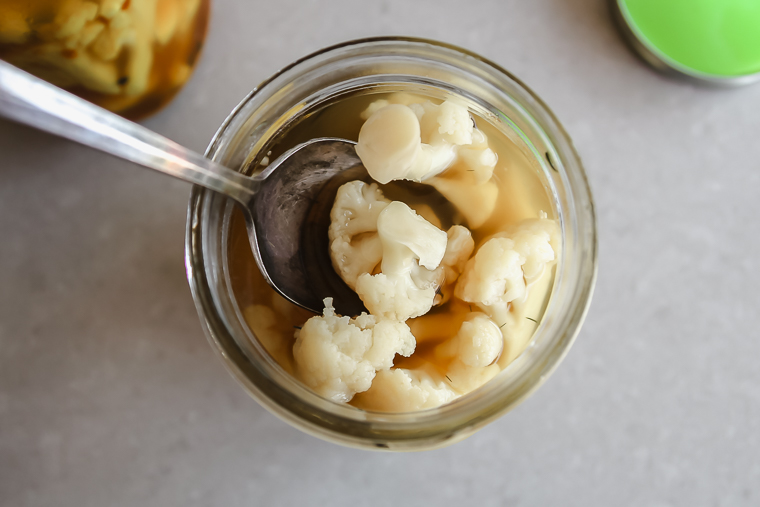
Crisp and slightly sour lacto-fermented cauliflower is a probiotic-rich food you can make at home! Fresh dill makes it taste like pickles!
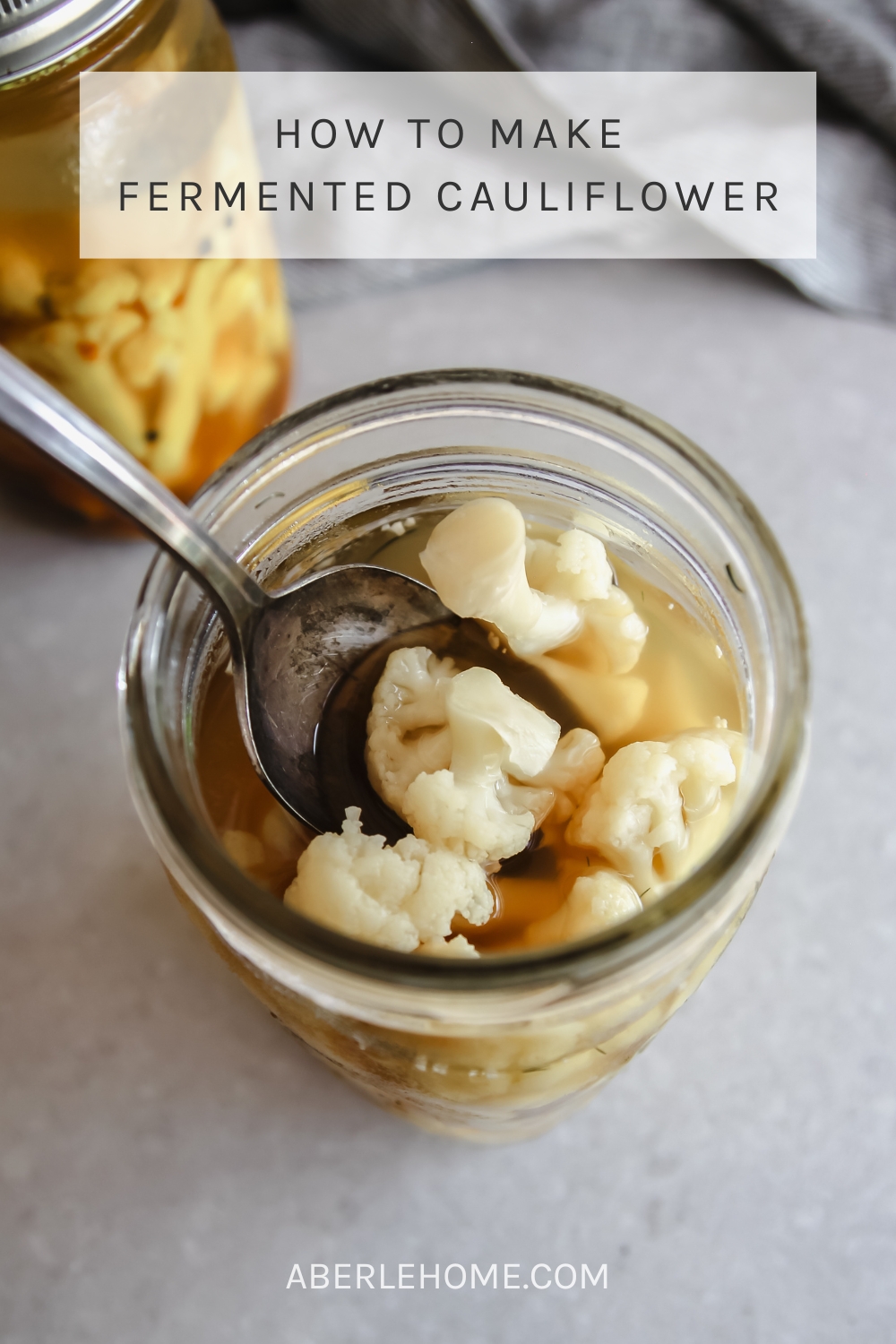
Did you know it’s easy to ferment cauliflower and other fresh fruits and vegetables at home with some simple supplies?
After searching in my favorite fermenting Facebook group, I learned a lot of people favor fermented cauliflower and carrots! So I was inspired to give both a try.
Fermenting Cauliflower for Health Benefits and Food Preservation
Fermented cauliflower contains living yeasts and bacteria to support the gut biome.
Cauliflower ferments in a salt-water brine in as little as 3-5 days, and if you enjoy eating cauliflower, you’ll likely enjoy this ferment!
Fermenting is also a way to preserve fresh produce, since fermented foods can usually last at least 4 months in the refrigerator in the brine!
What Does Lacto-Fermented Cauliflower Taste Like?
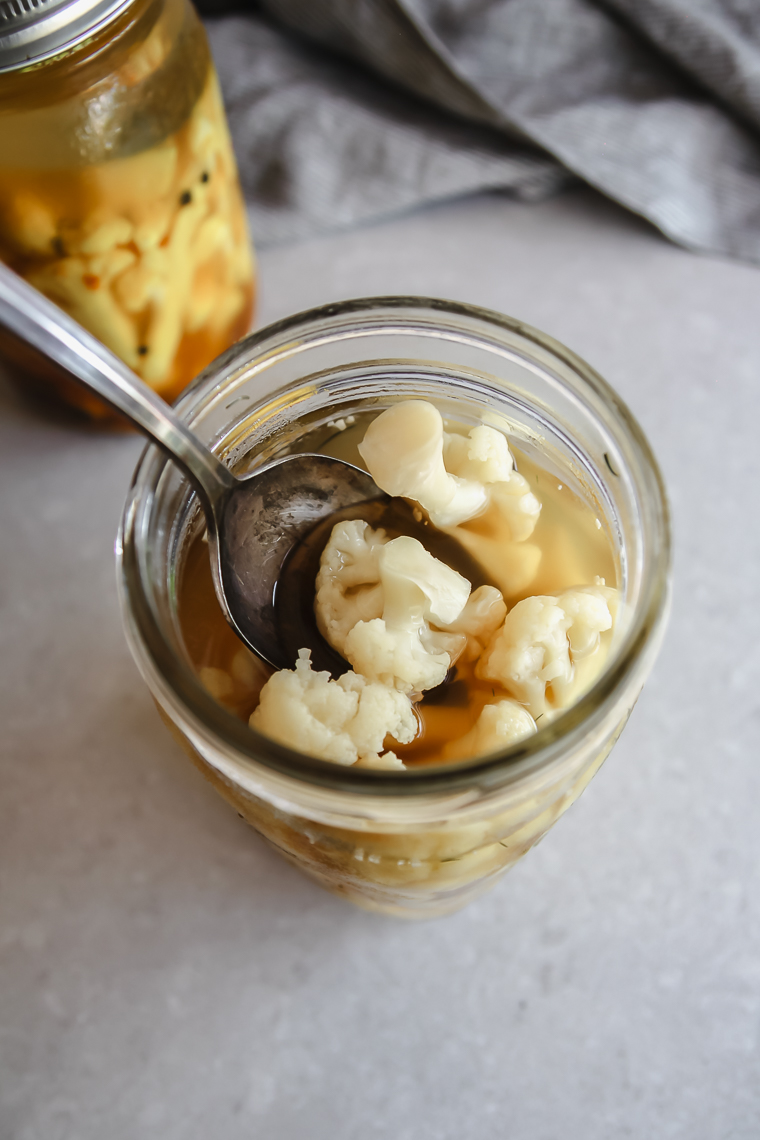
The cauliflower retains much of its crunch with the sourness of fermentation, and is not at all mushy.
The only necessary ingredients here are the cauliflower, water, and salt to create a 2.2% brine. You can omit or play around with other seasonings, if you wish. If you come up with a great flavor combination, I’d love to hear about it!
I made one version that tastes like dill pickles, and another where I replaced the dill with some ground turmeric. We love spicy foods, so I added crushed red pepper flakes to my ferments.
In case you didn’t know, I have instructions on my blog to make lacto-fermented sliced jalapenos, fermented carrots, and purple sauerkraut.
You might also be interested to learn that you can make the most delicious sweet honey ferments like my honey fermented cranberries.
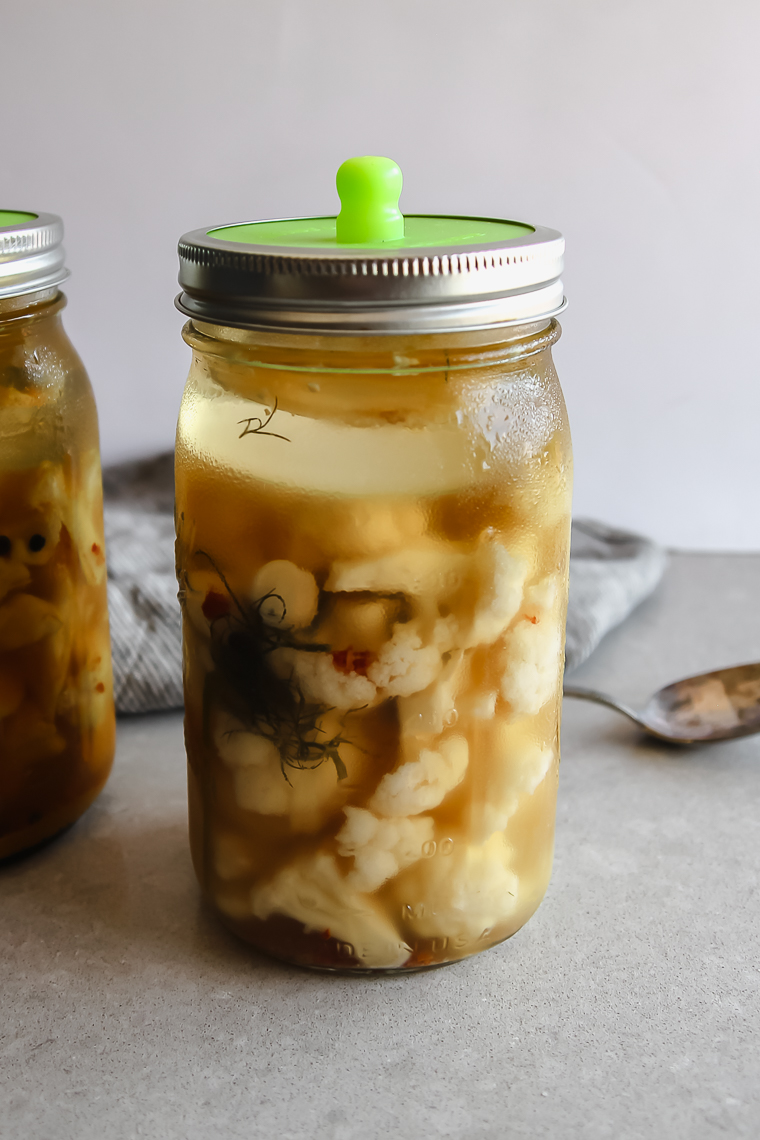
How to Make Lacto-Fermented Cauliflower
Step 1 – Add Cauliflower, Seasonings, and Water to Jar
There is no need to sanitize your jar and lids unless they’ve come in contact with mold in the past. A good wash in soapy dish water and a thorough rinse should do the trick.
Set a clean quart (32-ounce) wide-mouth mason jar on a digital kitchen scale and tare the scale out to zero.
You will weigh the ingredients in grams as you add them to the jar. (If you wish to use a different size jar, the process will be the same.)
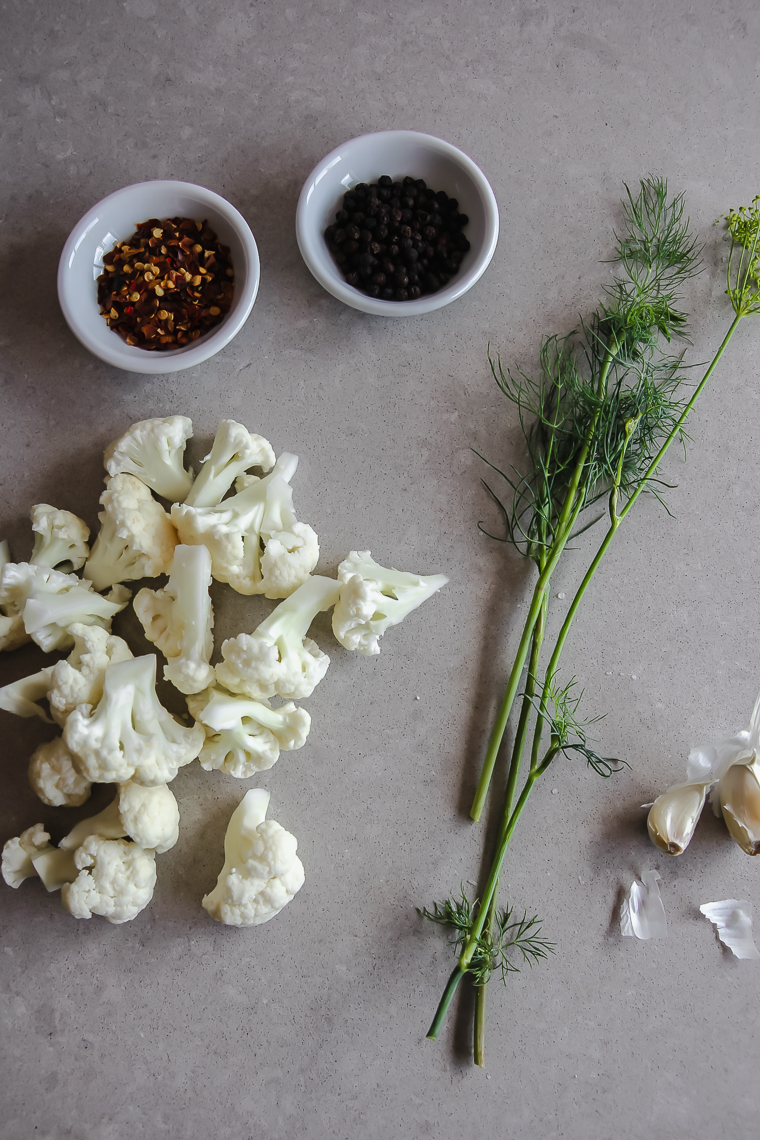
Add the crushed red pepper flakes, whole peppercorns, and peeled garlic into the jar.
Then press in the cauliflower florets, tucking in the pieces of fresh dill as you go (or you can skip the dill and add turmeric), until the cauliflower reaches the shoulder of the jar. (You can expect to use about 1/2 a small head of cauliflower for a jar this size.)
Pour unchlorinated water over the cauliflower to the shoulder. Make a note of the final weight of the ingredients and water together.
Step 2 – Add Sea Salt to Create a Brine
Multiply the total weight by 2.2% (.022) to determine how many grams of salt to add. So for example, if the contents of jar weighs 783g, you will add 17g salt.
Tare the scale to zero with the jar on top and weigh in the proper amount of salt (or weigh separately and add it in after if your scale is not sensitive).
Stir the salt into the brine as much as possible, but it’s okay if it’s not fully incorporated at this point.
Step 3 – Ferment Cauliflower
Press a clean fermentation weight onto the cauliflower to hold it below the brine. Wipe the rim of the jar to remove any brine or food.
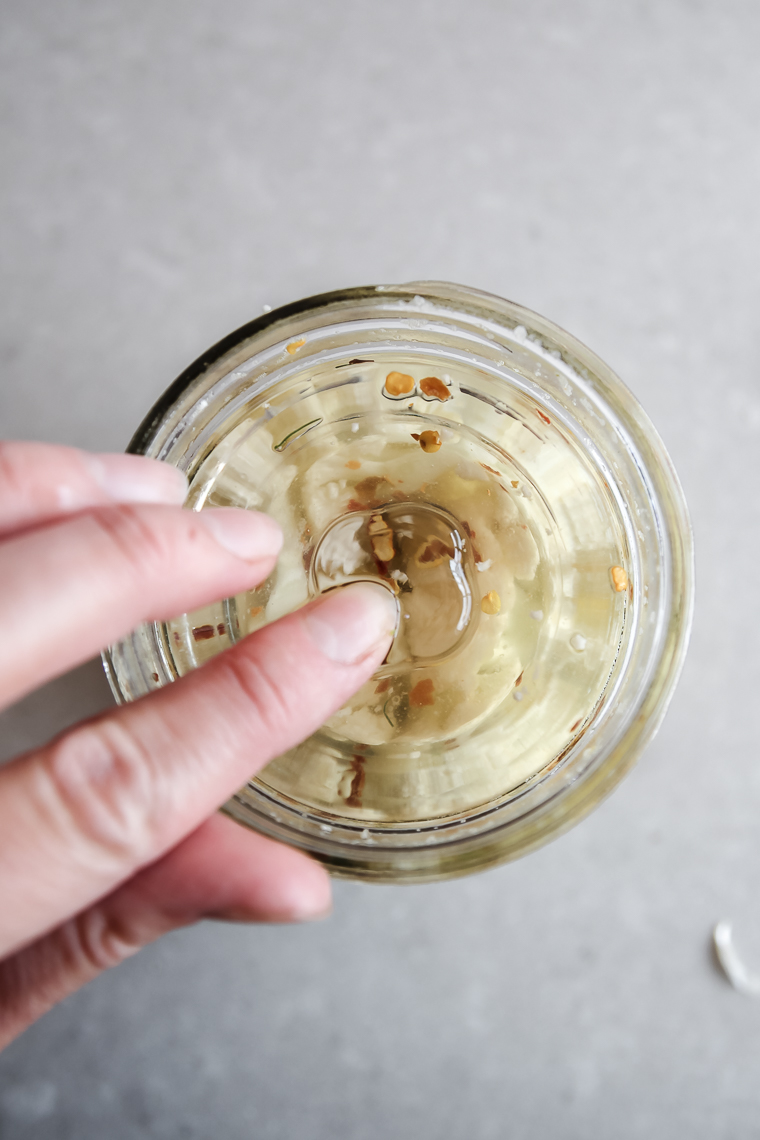
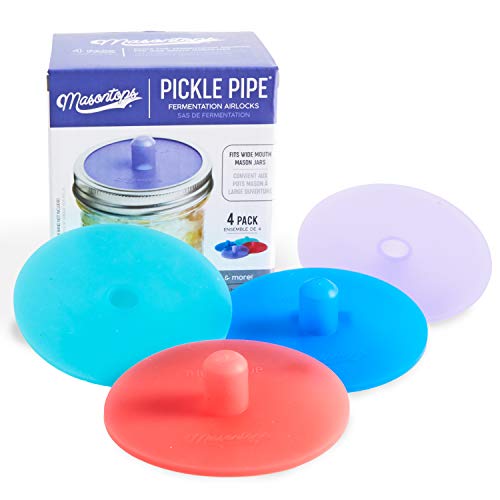
Fit a pickle pipe (also called an airlock lid) into the rim of the jar and screw the lid onto the jar.
Set the jar in a dark cupboard at room temperature for 3-5 days until the cauliflower is sour to your liking. It will go faster the warmer your home is.
You will notice bubbling as the ferment produces carbon dioxide gas, but the airlock lid will allow the gas to escape as needed.
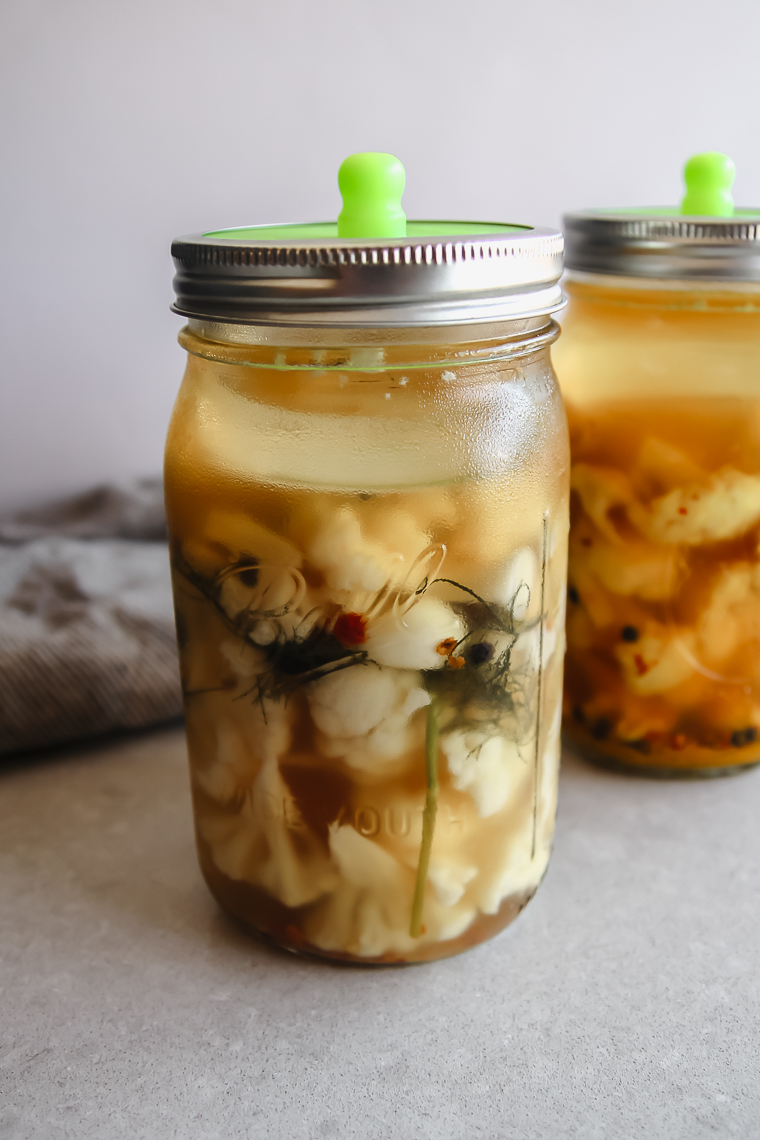
Once it has fully fermented, remove the glass weight and replace the fermentation lid with an airtight lid. Place the jar in the refrigerator for up to 4 months (it may last even longer!).
Enjoy straight from the jar as a snack or side dish!

Lacto-Fermented Cauliflower
Crisp and slightly sour lacto-fermented cauliflower is a probiotic-rich food you can make at home! Fresh dill makes it taste like pickles!
Ingredients
- 1/2 teaspoon crushed red pepper flakes
- 1 teaspoon peppercorns
- 2 cloves garlic, peeled
- Organic cauliflower, rinsed and cut into small florets (this will take about 1/2 small head)
- 3 heads fresh dill (or sub with 1/4 teaspoon turmeric)
- Unchlorinated water, room temperature
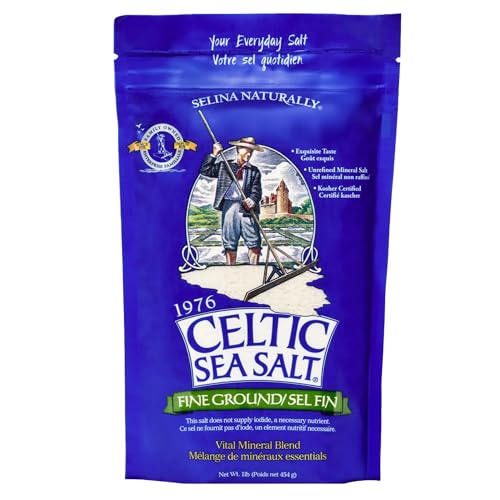
- Fine sea salt (not iodized salt)
Instructions
- Place a clean quart (32 oz) wide mouth mason jar on a digital kitchen scale and tare the scale to zero. (You will weigh in grams all the ingredients and water that are added to the jar.)
- Add crushed red pepper flakes, peppercorns, and garlic into the jar. Add cauliflower florets, tucking the dill in as you go (or add turmeric), until the cauliflower reaches the shoulder of the jar.
- Pour unchlorinated water into the jar to the shoulder. Multiply the final weight of the ingredients with the water by 2.2% (.022) to find how many grams of sea salt to add. This will create a 2.2% saltwater brine. (So if contents of jar weighs 783g, you will add 17g salt.)
- Add salt to jar and stir as well as possible (don't worry if salt isn't fully incorporated).
- Press a fermentation weight into the top of the cauliflower to hold it under the brine. Screw on a rim fitted with a fermentation airlock lid (pickle pipe), and set in a dark place.
- Allow to ferment at room temperature for 3-5 days until the cauliflower is tangy to your liking. Remove the airlock lid and weight, cover with a normal airtight lid, and refrigerate for up to 4 months.
Notes
You can follow this same process/ratio of spices to ferment cauliflower in any size jar. Just insure the mouth of your jar is the same size as your lids.
Recommended Products
As an Amazon Associate and member of other affiliate programs, I earn from qualifying purchases.



Nutrition Information:
Yield: 12 Serving Size: 1Amount Per Serving: Calories: 7Total Fat: 0gSaturated Fat: 0gTrans Fat: 0gUnsaturated Fat: 0gCholesterol: 0mgSodium: 53mgCarbohydrates: 1gFiber: 1gSugar: 0gProtein: 0g
*Nutrition information is not always accurate.